Showing posts with label botox treatment. Show all posts

Wednesday, April 22, 2020

Parts of body where botox treatment works

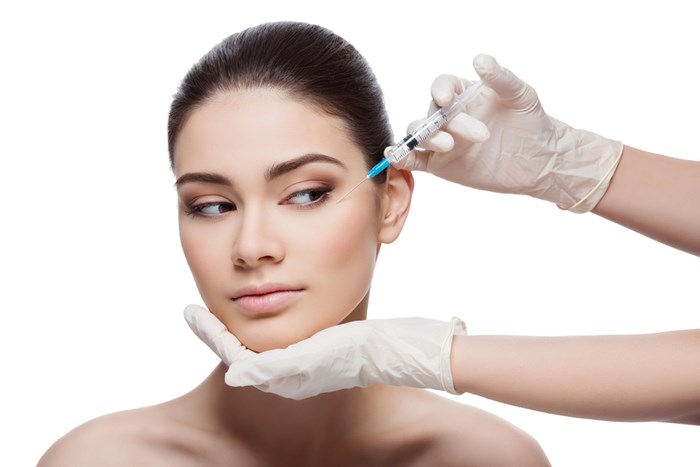
Aging is natural and happens to everyone, but looking old is something not many people are comfortable with. Know that there are cosmetic procedures, such as Botox treatment, available to help you look and feel younger.


Frown Lines

Contrary to popular belief, frown lines are not always caused by age. Age is a factor, but repeated facial movements, such as frowning or squinting, can also create frown lines, and this means they may develop even in younger adults.

With just 1 injection into each of 5 points between and above the eyebrows, Dysport®/Botox®/Xeomin® stops the signal from the nerve to the muscles, ultimately resulting in a reduction of muscle activity and temporarily preventing contraction of the muscles that cause frown lines.

Forehead Lines

Sometimes referred to as ‘surprise lines’, these appear on the forehead when your eyebrows are raised. As you age, they become more apparent. Excessive lines in this area can give the face and skin an aged appearance.

BOTOX® can lessen the effect but may not remove the lines completely. During your consultation, your practitioner might recommend a combination of BOTOX® and another treatment, such as dermal fillers.

Bunny Lines


Bunny lines are quite a common symptom that some of us, but not all of us, have. These are lines that scrunch up when you wrinkle up your nose; like a bunny.

If we don’t treat these bunny lines while treating other lines on our face, these begin to look stronger and deeper while other lines lighten up, creating an uneven and less attractive appearance. So for some, it’s a great treatment to have done by your Registered Cosmetic Nurse.

Crow’s feet


Crow’s feet are the lines around the outer corners of the eyes. These are all but unavoidable, and while they are referred to as “laugh lines” or “character lines”, they are an inevitable sign of ageing.

Treating the lines around your eyes or crow’s feet with Dysport / Botox will help create a refreshed and relaxed look. The results of using Dysport/Botox on your crow’s feet will soften the wrinkles around the eyes. Furthermore, it’s not obvious that you have had a treatment – people just think you look relaxed and fresh.

Under the eyes


Although it is possible to smooth fine creases underneath the eyes using BOTOX®, the area must be approached with caution. The muscle that is injected is the same muscle that partially controls the lower eyelid; therefore if too much is used, or the injection is placed incorrectly, it may lead to a drop of the lower eyelid.

If it is under-eye ‘bags’ that you wish to address – that is, the area between the lower eyelid and the upper cheek, or ‘tear trough – then it might be that a different treatment would be more effective than BOTOX® or could be used in combination with BOTOX®.

For example, ‘bags’ under the eyes are often caused by loss of volume in the tear trough area, meaning dermal fillers may be more suitable. 

Grumpy Mouth Lines


Grumpy mouth lines, or DAOs (Depressor Anguli Oris), are muscles which pull downwards for some expressions and leave downward lines beside your mouth.

As you age, if you express this way heavily and leave these lines untreated, you will have an exaggeration of the lines under your mouth stamped on your face all the time. Botulinum is a fantastic treatment here for those that need it. It can also give a lovely turn up at the sides of the mouth.

Jaw reduction


Jaw reduction is for some patients who prefer not to have a slightly squarish face, and to correct this, Botulinum toxin, a naturally purified protein, is painlessly administered directly into the masseter to give more of a V shape to your face.

The effect takes at least two months before it is apparent, and can last more than a year in most patients, using the high-dose approach. If using the low-dose approach, then the treatment needs to be repeated every few months.

Gummy Smile


A gummy smile is when some people smile, their upper lip elevates too far above their upper teeth, exposing gums and producing an unattractive smile. This phenomenon can be due to several factors. One of the reasons is a hyperactive muscle which elevates the upper lip. Occasionally, the gummy smile is also aggravated by a thin upper lip that further contributes to the problem by exposing the upper gum even more.

Thankfully, gummy smile reduction is now possible, simple, and effective. Utilising a non-surgical approach by injecting small amounts of Botox® into the hyperactive muscle of the upper lip, Stacey will give you a smile that is natural and carefree. With this procedure, you can smile without exposing teeth & upper gums too much.


If you are interested in learning more about Dysport®/Botox®/Xeomin® use for any of these treatments, please contact Beautiphi Auckland to schedule a consultation with one of our Cosmetic Medicine Nurses.

Address: Beautiphi, 2C/1, Tika Street, Parnell, Auckland, 1052, New Zealand

Website
: https://www.beautiphi.co.nz/

Facebook: https://www.facebook.com/beautiphiNZ/

Youtube: https://www.youtube.com/channel/UCw3WRVVzRVt9D3In_iKrMYA/

Customer care: info@beautiphi.co.nz

Contact: 022 383 7968


Friday, February 1, 2019

Botox & Dysport: Are They Similar?

The anti-wrinkle treatment Dysport works better than its older, more popular rival, Botox, at least on certain parts of the face, researchers say.


The two drugs faced off in a recent study designed to figure out which drug could best smooth out crow's feet wrinkles that extend from around the eyes on the temples of the face. Participants had one side of their face injected with Dysport and the other with Botox.

Dysport proved superior at reducing signs of crow's feet wrinkles when participants contracted their facial muscles as much as they could. In addition, two-thirds of the participants preferred the results on the side of the face treated with Dysport. Neither the researchers nor the patients knew which side received which treatment.

Wrinkle Wars on Your Skin


Botox and Dysport contain a slightly different chemical variation of botulinum toxin, a protein made by the bacteria Clostridium botulinum. The drugs are thought to work in the same way, by blocking nerve signals to the muscles, thus relaxing them. Botox has been approved by the Food and Drug Administration for the treatment of wrinkles between the eyes (forehead wrinkles) in 2002, and Dysport was approved for the same use in 2009.


To test their effectiveness in smoothing out other wrinkles, the newest "split-face" research, headed by Dr Corey Maas, a plastic surgeon at San Francisco, Calif., involved 90 participants with a mean age of 54.

Doctors and patients were asked to rate the intensity of the crow's feet wrinkles on a scale of 0 (no wrinkles) to 4 (severe wrinkles), both in the time of the shot and one month later.

Depending on the scores, Dysport had an edge over Botox in reducing signs of wrinkles when patients contracted their muscles, as you might during grinning. When patients' muscles were at rest, there was not a significant gap between the scores.

Dosage issue


The researchers used three times as much Dysport as they did Botox said Dr. Gary Monheit an associate clinical professor of dermatology at the University of Alabama at Birmingham, who wasn't involved in the work. Earlier studies conducted by the FDA used less Dysport, at a ratio of 2.5 to 1. Since either of these products will have a higher efficacy if the dose is increased, the researchers, if they intended to or not, might have"stacked the deck" in favour of Dysport, Monheit explained.

"A previous study that utilized a higher dose of Botox compared to one in this study found Botox was the better of the pair, '' he explained.

"For me, they're all nearly the same," he explained of the products. There's no established dose conversion between Botox or Dysport, according to a health expert.

It concludes that both have their respective benefits. The best solution is to choose the best skin care specialist for your treatments.

To get more personalized information, the best thing to do is schedule a consultation with Stacey Power at the Beautiphi Auckland.

Address: Beautiphi, 2C/1, Tika Street, Parnell, Auckland, 1052, New Zealand

Website: https://www.beautiphi.co.nz/

Facebook: https://www.facebook.com/beautiphiNZ/

Youtube: https://www.youtube.com/channel/UCw3WRVVzRVt9D3In_iKrMYA/

Customer care: info@beautiphi.co.nz

Contact: 022 383 7968

How crow's feet can be treated with Botox?

Botox injections are one of the most common kinds of outpatient procedures for crow's feet. These wrinkles would be the fan-like formations that develop near the outside corners of your eyes. They can be difficult to deal with using home methods.


Regardless of the efficacy of Botox treatments, there's a lot of information. Risk factors, and Price, frequency are some.


What is crow's feet?

Crow’s feet are the lines around the outer corners of the eyes. These are all but unavoidable, and while they are referred to as “laugh lines” or “character lines”, they are an inevitable sign of aging.


How Botox works?

It is used for a variety of purposes, including excess perspiration and eye twitching. The injections work by preventing nerve signals so that they don't contract from reaching the muscles.


The injections relax muscles surrounding the eye corners, which means that the skin smooths out when applying for crow's feet. When you laugh the effects can be especially noticeable.

Try this treatment for yourself and be ready for comments on how good you look. If you’ve got strong crow lines, it’s the treatment for you.


What to expect after Botox is done?

Botox Cosmetic is injected around your crow's feet with needles. Even in the event that you tolerate shots, your healthcare provider will likely recommend a topical anesthetic, like ice, to numb the area.

Your healthcare provider will start the injection process, once your skin around your eyes is numb. Since crow's feet pay a small area of the face itself will only take a few minutes.


The procedure may last longer if you opt to combine other treatment approaches together with Botox injections. Sometimes laser therapies are used in conjunction.


Is it Effective?

It takes around three weeks for Botox treatment to make consequences according to the pros. The muscles can start to relax. The results generally last a few months. To be able to keep smoothness every couple of months you will have to understand your health care provider.


At a 2016 analysis of 1,362 patients that used Botox to get crow's feet, the outcomes lasted for four months.


What you will pay?

It is important to get ready for the long-term costs associated with use when contemplating Botox for crow's feet. Health care providers will bill you based on how many units are necessary, rather than the trip.


What is the recovery time?

The recovery period for Botox is short compared with other types of cosmetic processes. Unless you begin to experience side effects you're ready to go home right after your injections.

At-home recovery can also be simple. Precisely the moment, you are able to wear makeup and clean your face. You can go back to work. Make sure that you don't rub on the skin around your eyes, however. This may get the medication to maneuver away from the crow's feet.


Conclusion

When used on a constant basis, Botox might be an effective treatment for crow's feet. However, this method isn't suitable for everyone based on health history. In case you take any medications or herbal supplements, Inform your healthcare provider. They may request that you discontinue them before the procedure.

To get more personalized information, the best thing to do is to schedule a consultation with Stacey Power at the Beautiphi Auckland.


Address: Beautiphi, 2C/1, Tika Street, Parnell, Auckland, 1052, New Zealand

Website: https://www.beautiphi.co.nz/

Facebook: https://www.facebook.com/beautiphiNZ/

Youtube: https://www.youtube.com/channel/UCw3WRVVzRVt9D3In_iKrMYA/

Customer care: info@beautiphi.co.nz

Contact: 022 383 7968

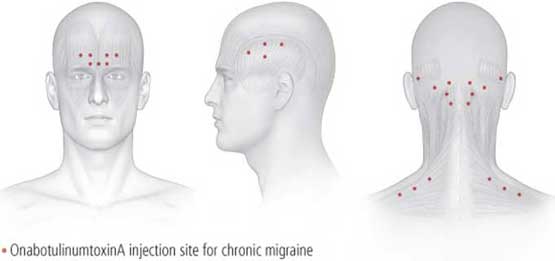
Botox For Migraine And Tension Headaches

For migraine sufferers, finding a remedy that works can be, well, a headache. While there are many prescription medications available, they do not work for everybody and frequently have unwanted effects.

One medication, you may not be aware of that's used for migraines is Botox (botulinum toxin), the exact same injection that's most frequently known as a cosmetic treatment to reduce wrinkles around the face. Based on severity and frequency, Botox can be quite a life-changing preventative measure.

However, before you think about Botox as a migraine treatment, you should know it's associated with some side effects and you can find studies that question exactly how effective the injection is for migraines.

But, it is not harmful because the protein is administered in small doses rather than to your blood.

Success with Botox


The most common question for the people suffering from headaches is, Can Botox help with tension headaches? Some doctors, however, say their experience with their particular patients indicates Botox which was approved by the FDA in 2010 to treat migraines is quite effective for this use. Lawrence Newman, MD, a neurologist and director of this headache branch at NYU Langone Medical Center in New York City, says many of his patients have experienced a significant decrease in the number of headaches per month after receiving Botox. Oftentimes, he says, it's cut that number by 50 percent and frequently more than that.


"I do consider Botox safe," he adds. "So much so that I receive it myself to my chronic migraine."

Due to Botox therapy, Newman's migraine episodes have dropped from 16 per month to 5 or 6 per year. He receives treatment every 12 weeks.

"However, like any drugs, there are potential side effects," he acknowledges.

Reducing Pain Messages to Brain


Botox works by blocking a neurotransmitter that tells muscles to contract. Contracted muscles in the head and neck are considered to cause some migraines. Additionally, it is considered that Botox reduces the pain messages sent to the brain.


Though botulinum toxin can be found under different names, Botox is the only one that's FDA approved for migraine prevention. To be considered for Botox, patients should have migraines 15 days or a month, which is deemed chronic daily migraine. Additionally, patients should have attempted and failed on 2 other drugs.

Common Side effects of Botox


Some of the potential side effects related to Botox are swelling or swelling where the injection is created, hassle or flu-like symptoms, crooked grin, hyperactivity, and excessive tearing.

Some people notice that the injections given in the forehead cause eyelids to droop. Since Botox wears off, adverse reactions caused by Botox are inclined to also decrease.


For both medical and cosmetic functions, Botox treatments for migraine also ought to be repeated on a regular basis.

An extremely uncommon side effect is called "distant spread," in which the poison spreads to other areas of the human body, websites far from where it was originally injected. For instance, distant spread caused difficulty in breathing and swallowing in young children who received Botox therapy in their own legs to facilitate cerebral palsy muscle aches.

In general, the current standard of care for the treatment of chronic migraine with on a botulinum toxin type A (Botox®) is injections every 12 weeks. It is usually worthwhile having at least two treatment sessions to assess treatment response. If folks have not responded by 2 to three treatment sessions it's usually considered that the individual is a non-responder. As experience increases with the use of Botox® as a preventative therapy for a chronic migraine some clinicians are identifying that longer intervals between injections may at times be acceptable.


The option of 12 weeks between treatments with Botox for chronic migraine is largely depending on the pivotal research studies which were used to achieve its treatment approval. In daily clinical headache clinic, it is not unusual to vary the duration between Botox remedies in some patients. Experience has demonstrated that some individuals not only acquire an advantage within the 12 weeks after their last Botox injection but also sometimes for additional weeks afterwards. However, it is difficult to generalize these conclusions since they are often made on an individualized basis.

Generally terms cranial Botox, or Botox for other conditions is generally administered approximately every 12 weeks due to the treatment reaction being considered more reliable during this period of time. It is unfortunate when patients experience a sporting of the impact of any preventative treatment impact 10 to 12 weeks after the last shot, but the logistics of care delivery i.e. clinic ability, staff availability or other factors are occasionally responsible for extending the time between injections.

There's no fantastic evidence to suggest that cranial Botox® is less likely to operate if delayed more than 12 weeks. In fact, in patients who might be considered equivocal or borderline Botox treatment responders, some headache clinics choose to wait a further month or two beyond 12 weeks to assess whether any relapse to more frequent migraine occurs compared to the immediate few months post-treatment. This sometimes allows an appraisal about whether further Botox® is really needed.

To get the best solutions for migraines and chronic headaches visit Beautiphi New Zealand.


Address: Beautiphi, 2C/1, Tika Street, Parnell, Auckland, 1052, New Zealand

Website: https://www.beautiphi.co.nz/

Facebook: https://www.facebook.com/beautiphiNZ/

Youtube: https://www.youtube.com/channel/UCw3WRVVzRVt9D3In_iKrMYA/

Customer care: info@beautiphi.co.nz

Contact: 022 383 7968

Popular Posts